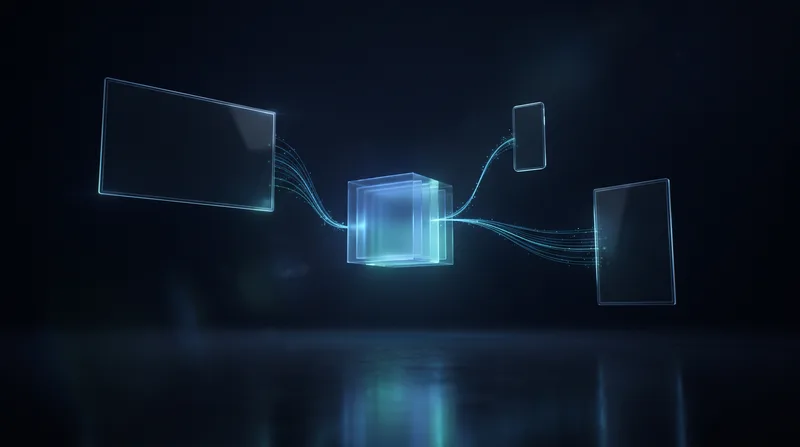
A headless CMS pays off when the same content has to appear in several places, or when your content is more than text for a website. For a small website with a few pages, a classic CMS is usually the better choice. With us, a first project with a headless CMS starts at 8,000 euros.
This post explains what a headless CMS is and when it fits. It also shows what is often underestimated in projects.
What is a headless CMS?
A CMS is a content management system. Your team uses it to manage the content of a website.
A classic CMS does two things at once. It manages the content, and it builds the finished page from it. Content and presentation are tied together. WordPress is the best-known example.
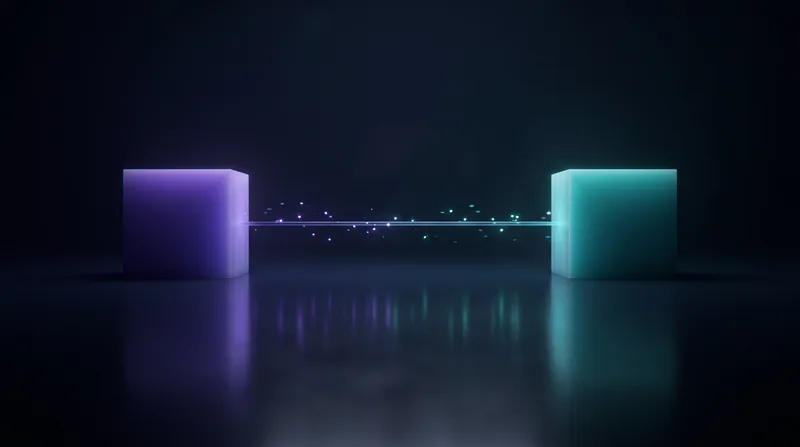
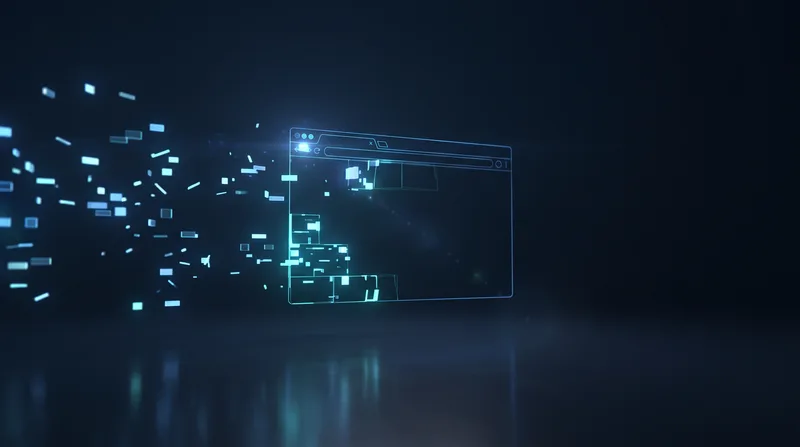
A headless CMS separates the two. It only manages the content and hands it out through an API. An API is an interface other programs use to request data. The presentation is an application of its own: a website, an app or a partner portal. “Headless” means “without a head”. The head here is the presentation.
There is also a short explanation in our glossary under Headless CMS.
When a headless CMS pays off
The same content in several places. A product appears on the website, in an app and in a portal for dealers. With a headless CMS you maintain it once. Every channel reads the same data.
Content that is really data. Product data, locations, contact persons or applications have a fixed structure. A headless CMS stores them so that other systems can work with them too.
A frontend that will change. When the presentation does not depend on the content system, you can rebuild the website without moving all the content. In a relaunch, that is often the most expensive item you save.
Connecting other systems. If content has to be matched with an ERP or CRM, a clean API is a must. Our post on connecting Directus to an ERP shows what that looks like in practice.
When a classic CMS is enough
A headless CMS is not always the better choice. A classic CMS is often enough when:
- you have a website with a few pages that rarely change.
- only one person manages the content.
- there is no second channel that needs the same content.
- you have no budget for a separate frontend.
In these cases the separation brings more effort than benefit. How a website stays easy to maintain for years, even without a headless CMS, is covered in Building maintainable websites.
What is often underestimated
The preview. In a classic CMS you see what the page looks like while you edit. A headless CMS does not do that on its own. A preview has to be built on purpose. Leave it out, and your editors struggle every day.
The content model. A headless CMS asks you: what parts is a piece of content made of? You have to answer that question at the start. A good model consists of building blocks that editors combine freely. In a relaunch for a creative agency, we built cases this way: text, text with image, single media and gallery. The editors put together what a case needs. A new block is a new component, not a rebuild of the old pages. More in the case study on the agency website relaunch.
The migration. Old content almost never fits the new model one to one. In the same relaunch we moved over 80 posts by script. Over 300 combinations of text and image were split into separate blocks along the way. A script can be run again after every change to the model. A manual migration starts from scratch each time.
Operations. A headless CMS and a frontend are two applications. Both need updates, hosting and monitoring. Plan for that from the start.
Which headless CMS?
There are many systems. Well-known names are Directus, Strapi, Contentful and Storyblok. The choice mainly depends on two questions:
- How structured is your content? Plain text for a website has different needs than product data or applications.
- Where should the data live? Some systems only exist as a cloud service. Others you can also run on your own servers, for example in Germany.
We often work with Directus, and we are an official Directus partner. Directus sits on top of a normal SQL database. Your data stays in tables you own. That is why Directus also suits data that is not purely editorial. Directus runs as a cloud service or on your own servers. More on our page as a Directus agency.
What it costs
Our guide prices for 2026, net:
| Service | Price |
|---|---|
| Concept or workshop | €3,000 to €5,000 |
| MVP with a headless CMS | from €8,000 |
| Larger platform with integrations | from €40,000 |
We name the exact price after the first call. Hosting and, where needed, a license for the CMS come on top. What drives the price is explained in How much does custom software cost?.
Frequently asked questions
Is a headless CMS more expensive than WordPress? At the start, usually yes, because the frontend is built separately. It pays off when you serve several channels or manage structured data.
Can my editors work with it? Yes, if the content model and the preview are built well. Plan time for that.
Can we switch later? Yes. Because content and presentation are separate, you can renew the frontend without touching the content.
The next step
Wondering whether a headless CMS fits you? In a free first call we look at your content and your channels. Afterwards you know which way fits and what it costs. More about our work with Directus is on the Directus agency page. Or write to us directly.