Talent Is Universal. Opportunity Should Be Too.
The global tech talent crisis isn't a supply problem. It's a geography problem. 85 million workers will be short by 2030, the talent exists. What's missing is the willingness to build a structure worth staying for. And outsourcing was never going to fix it.
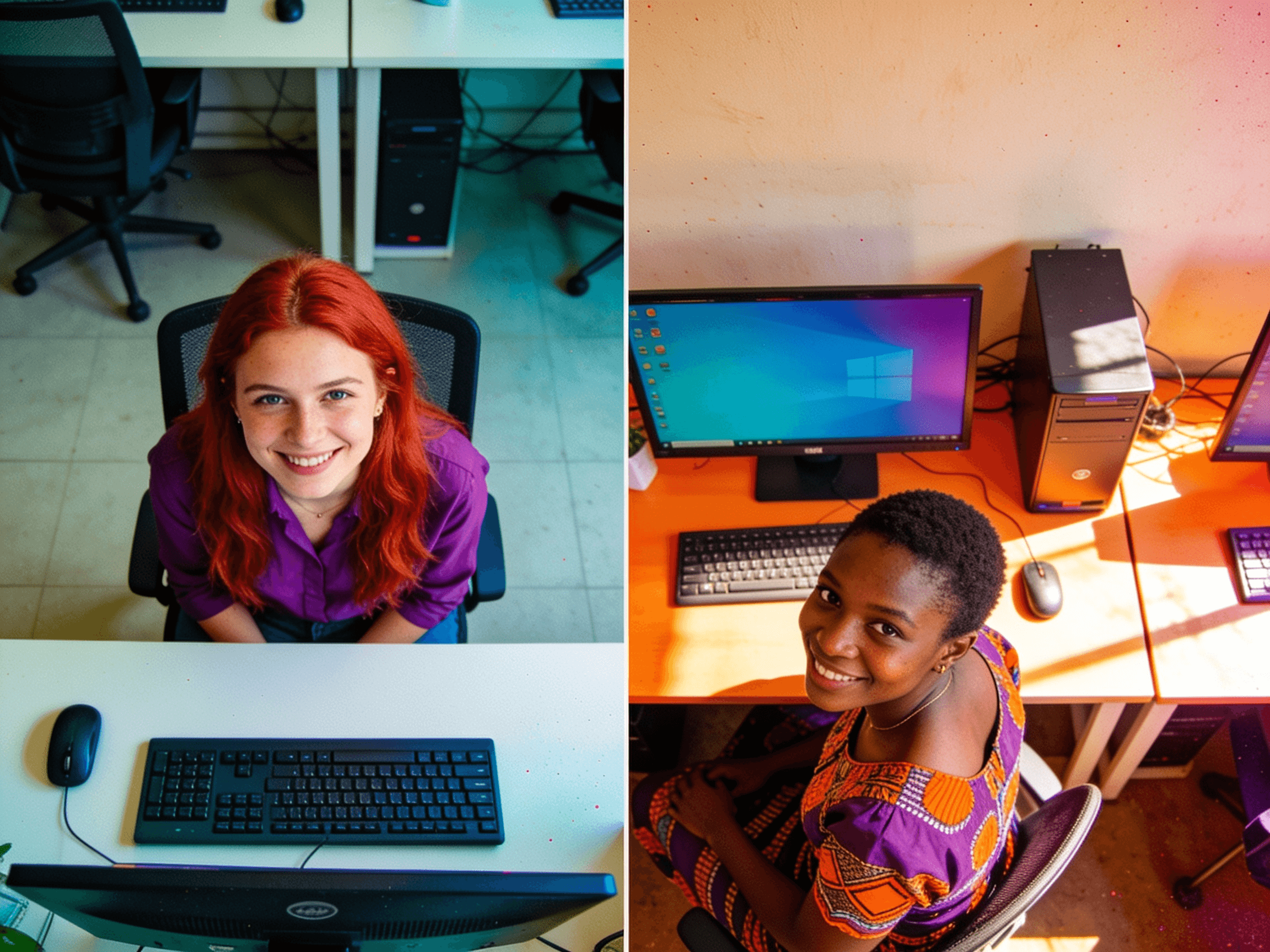

Somewhere in Douala right now, someone is learning to code.
Not because they love it, though they might. Because it is the closest thing to a door that exists where they are. Learn the skill, get good enough, and maybe the opportunity follows. Maybe it comes to you. More likely, you go to it.
38 percent of African developers already work for companies headquartered somewhere else. Most of them did not leave because they wanted to. They left because the work did not come to them.
The skill was never the issue.
There is no shortage of engineers in the world. There is a shortage of companies willing to look past their own time zone.
Meanwhile, Europe is running out of engineers.
Germany is short 390,000 skilled workers today. The EU needs 20 million ICT specialists by 2030 and is on pace for 12 million. More than half of European businesses reported last year that they could not hire the technical people they needed. By 2030, the global shortage hits 85.2 million workers and $8.5 trillion in unmade revenue.
The developer in Douala is learning to code. The company in Stuttgart cannot find engineers. The distance between them is not skill, not language, not work ethic or ambition or capability. It is that nobody built a structure worth staying for.
Outsourcing was never the answer.
The response the industry defaulted to is outsourcing. Which sounds like a solution until you look at what it actually does.
Outsourcing takes the work to where the labour is cheap and leaves everything else where it was. The developer in Douala gets a contract. The company in Stuttgart gets a deliverable. Nobody grows. Nobody stays. The relationship lasts as long as the invoice and not one day longer. When the budget tightens or the project ends, the developer is back where they started, and the company is back on LinkedIn posting the same senior engineer role for the sixth time.
The problem is still there when the project ends.
What equal terms actually look like.
The harder thing, the thing almost nobody does, is build the structure properly.
Equal pay for equal work. Not "competitive for the market", equal. Shared credit on what gets shipped. Teams that stay together across projects and across years, long enough that the people in them grow into something they could not have grown into alone. That structure is more expensive to build than a vendor contract. It requires you to believe the person on the other side of the bridge is worth the same as the person on yours. A lot of companies say they believe that. Very few have built anything that proves it.
That is what we set out to build with Camsol. A software company built between Sankt Georgen, Germany and Buea, Cameroon - not as an outsourcing arrangement, but as a single team working on the same projects, with the same stakes. Engineers in Buea working alongside clients from Europe, not beneath them. The same codebase, the same standups, the same credit when something ships.
When it works, the results are not subtle. You stop losing time to handover friction. You stop rebuilding context every six months when a contractor rolls off. You get people who are invested, because the structure gives them something worth being invested in.
Those are not the outputs of a charity model. They are what happens when you stop treating talent as a resource to extract and start treating it as something to build with, on equal terms, for the long run.
Nobody is asking for charity. Just for the structure to catch up with the reality.
The developer in Douala learning to code right now should not have to choose between the work they want and the city they are from.
That is not an idealistic position. It is an accurate description of what the talent market actually needs and what the best builders in overlooked places actually deserve.
The gap between those two things is not a law of nature. It is a habit. And the companies that break it first will not just feel better about themselves. They will build better things.
Camsol is a software company built between Sankt Georgen, Germany and Buea, Cameroon, on the conviction that talent should not have a postal code.